

Unlocking Your Global Potential the ACCA Course Explained
Introduction
The Association of Chartered Certified Accountants (ACCA) is a globally recognized accounting qualification headquartered in the United Kingdom. It provides a strong foundation in International Financial Reporting Standards (IFRS), equipping students with expertise in global accounting practices.
ACCA is recognized in more than 180 countries, including the UK, Canada, Singapore, and the UAE. The course generally takes around 3 years for students enrolling after Class 12 and approximately 2 to 2.5 years for commerce graduates, depending on exemptions.
As one of the world’s largest professional accounting qualifications, ACCA is highly respected among multinational companies and global employers. In India, ACCA is widely regarded as comparable to CA, and leading organizations such as PwC, Deloitte, EY, KPMG, Grant Thornton, and BDO actively recruit ACCA professionals.
ACCA Syllabus
The ACCA course covers core accounting and finance subjects, including:
- Accounting
- Financial Reporting
- Auditing
- Taxation
- Business Finance
- Financial Management
The ACCA qualification consists of 13 examinations, grouped into three levels:
- Applied Knowledge Level
- Applied Skills Level
- Strategic Professional Level
Knowledge-level examinations are available on demand throughout the year, while the Applied Skills and Strategic Professional examinations are conducted every March, June, September, and December. All ACCA examinations are now computer-based.
ACCA Course Exemptions
ACCA offers exemptions based on a candidate’s previous academic qualifications. Students who have completed only Class 12 are not eligible for exemptions but can enroll through the Foundation in Accountancy (FIA) route.
| Qualification | Exams to Appear | Exemptions |
|---|---|---|
| Class 12 Pass | 13 Papers | None |
| Commerce Graduate | 9 Papers | BT, MA, FA, LW |
| M.Com Graduate | 9 Papers | BT, MA, FA, LW |
| CA IPCC (Both Groups) | 8 Papers | BT, MA, FA, TX, AA |
| Qualified CA | 4 Papers | BT to FM (9 Papers) |
ACCA Eligibility Criteria
To register for the ACCA qualification, candidates must satisfy the following eligibility criteria:
- Be at least 18 years old.
- Have completed the 10+2 (Class 12) examination.
- Secure at least 65% in Mathematics or Accounts and English.
- Obtain a minimum of 50% aggregate marks in the remaining subjects.
Students who have completed Class 10 or do not meet the above eligibility criteria can still begin their ACCA journey through the Foundation in Accountancy (FIA) route.
ACCA Fee Structure
The ACCA examinations are conducted four times every year in:
- March
- June
- September
- December
Since ACCA fees are payable in British Pounds (GBP), the overall course cost in India may vary depending on currency exchange rates. Students are required to pay registration, subscription, and examination fees before each examination session. Examination fees differ based on the paper and are subject to revision by ACCA from time to time.
Conclusion
Avinash College of Commerce is committed to delivering world-class commerce education through academic excellence, industry-oriented training, experienced faculty, and strong placement support. Along with technical expertise, the college emphasizes the development of communication, leadership, teamwork, and other professional skills that are essential for a successful career in accounting and finance.
Similar Blogs
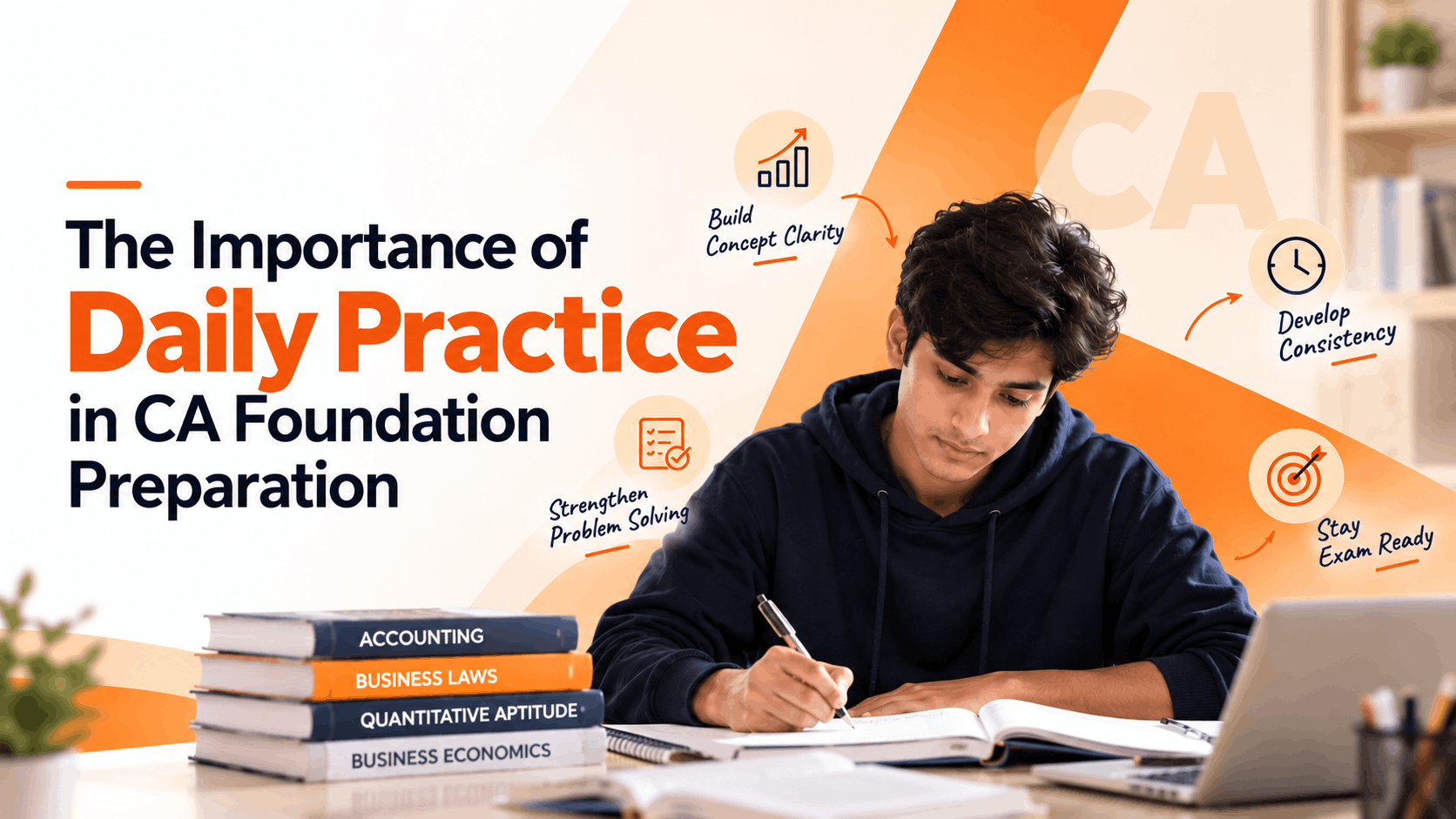
The Importance of Daily Practice in CA Foundation Preparation
Preparing for the CA Foundation examination requires more than understanding concepts. Students need regular practice, revision, problem-solving, and exam-oriented preparation to build confidence and accuracy. A consistent approach can make a significant difference, particularly when students have to manage multiple subjects and a broad syllabus. Effective CA Foundation Preparation involves not only learning but also... The Importance of Daily Practice in CA Foundation Preparation
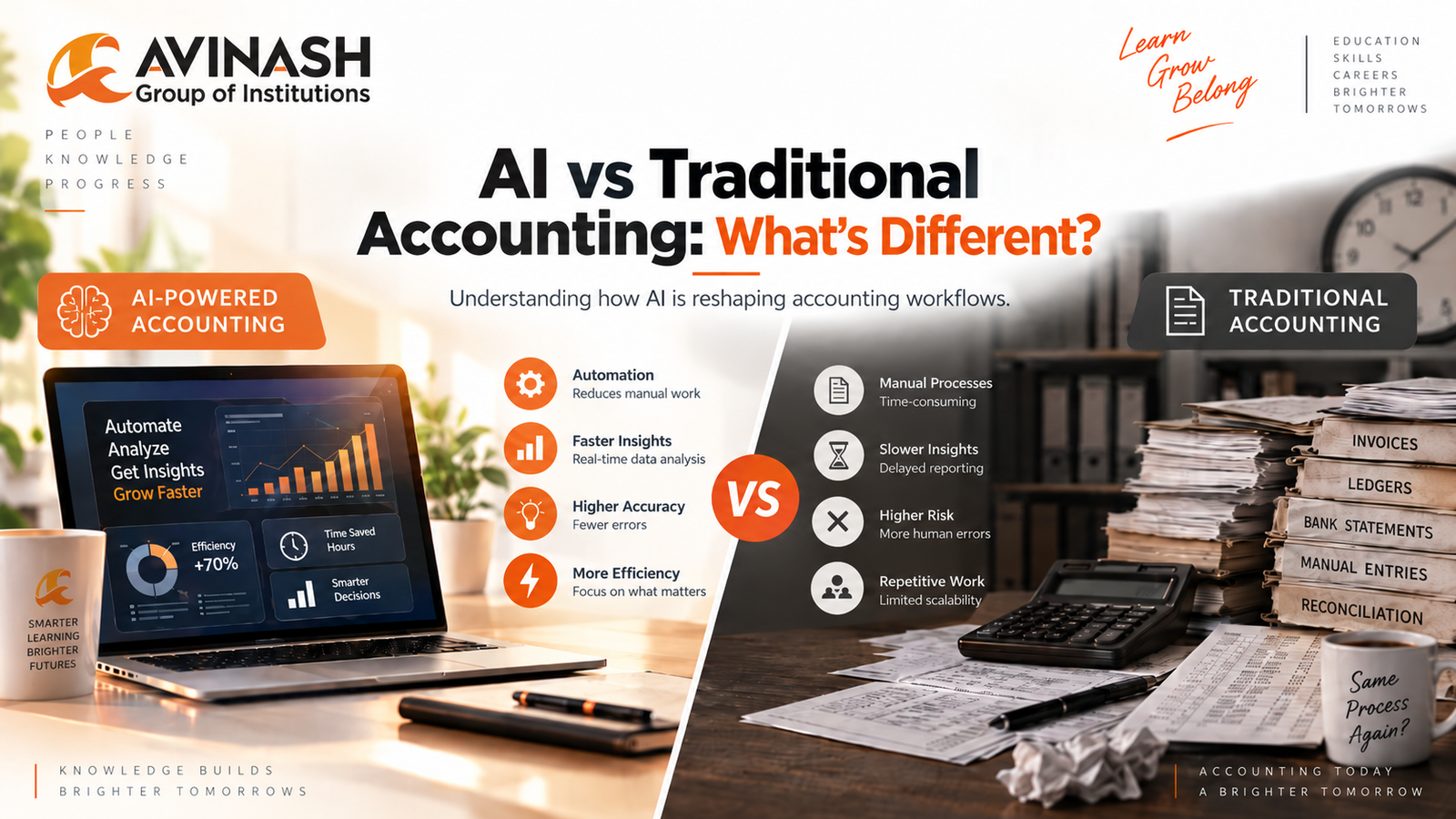
AI vs Traditional Accounting: What’s Different?
Artificial intelligence is changing how businesses record, analyse, process, and interpret financial information. While Traditional Accounting Methods rely heavily on manual processes, established accounting software, reconciliations, and professional review, AI-powered systems can automate repetitive tasks, identify patterns, process large datasets, and provide faster insights. It is also not true to say that traditional accounting is... AI vs Traditional Accounting: What’s Different?

Top AI Certifications for Commerce and Finance Students
Artificial Intelligence (AI) is transforming the way businesses manage data, analyse financial information, automate repetitive tasks, detect risks, and make strategic decisions. As finance and commerce roles become increasingly technology-driven, students with a combination of business knowledge and AI skills can build a stronger foundation for future careers. For commerce students, studying AI does not... Top AI Certifications for Commerce and Finance Students

Benefits of Pursuing CA Alongside a Degree
For commerce students, making a decision about a career after Class 12 becomes crucial. Although earning a bachelor’s degree is a source of academic knowledge, pursuing Chartered Accountant CA Alongside Degree can help students enhance their career prospects. Doing so, students will be able to acquire academic knowledge by earning the degree and develop skills... Benefits of Pursuing CA Alongside a Degree

How ACCA Prepares Commerce Graduates for Global Career Success?
Making the best choice when it comes to professional qualification is one of the crucial decisions made by students that will affect their future careers in finance and accounting. In today’s world where businesses operate in international markets, the demand for professionals having internationally recognised skills and certifications is increasing day by day. The ACCA... How ACCA Prepares Commerce Graduates for Global Career Success?

Why B.Com (Hons) + ACCA Is Best for Global Careers
In today’s competitive and globally connected world, accounting professionals need more than just a traditional degree to stand out. One of the most powerful academic combinations that is gaining attention is B.Com with ACCA. This integrated program blends the theoretical foundations of commerce with the internationally recognised professional credential of the Association of Chartered Certified... Why B.Com (Hons) + ACCA Is Best for Global Careers

Top Courses You Can Pursue Along with Bcom
A Bachelor of Commerce (B.Com) degree lays a strong foundation in accounting, finance, and business management. However, to stand out in today’s competitive job market, pursuing additional courses alongside your B.Com can be a smart move. These courses will enhance your knowledge, skills, and career opportunities. Here are some of the top courses you can consider.

Comparing CA and ACCA : Which Course Is Right for You?
When deciding on a career in finance or accounting, two of the most popular options are the Chartered Accountant (CA) and the Association of Chartered Certified Accountants (ACCA) qualifications. Both courses are well-respected globally and can open doors to various career opportunities. However, choosing between them can be challenging. In this blog, we’ll explore the key differences between CA and ACCA to help you decide which one suits your goals best.