

Comparing CA and ACCA : Which Course Is Right for You?
When deciding on a career in finance or accounting, two of the most popular options are the Chartered Accountant (CA) and the Association of Chartered Certified Accountants (ACCA) qualifications. Both courses are well-respected globally and can open doors to various career opportunities. However, choosing between them can be challenging. In this blog, we’ll explore the key differences between CA and ACCA to help you decide which one suits your goals best.
Table of Contents
CA vs ACCA: An Overview
Before diving into the differences, it’s important to understand the basic nature of these two qualifications.
- CA (Chartered Accountant): The Institute of Chartered Accountants of India (ICAI) offers the CA qualification. It is highly regarded in India and is essential for those looking to work in accounting and auditing, especially within the Indian market.
- ACCA (Association of Chartered Certified Accountants): ACCA is a global qualification recognized in over 180 countries. This course is ideal for those who are looking to build an international career in finance, accounting, or business management.
Which is Better: CA or ACCA?
There is no definitive answer to which course is better. It depends on what you want to achieve in your career. Here are a few factors to consider:
- Scope: If your goal is to work in India and specialize in auditing, taxation, or accounting, CA is a great option. It is more focused on the Indian legal and financial system. On the other hand, if you want to work abroad or in multinational companies, ACCA has a more global appeal.
- Difficulty: CA is known for its rigorous exams and low pass rates. Many students find it challenging to complete this course in one attempt. ACCA, while also challenging, has a slightly higher pass rate, making it comparatively easier for some students.
ACCA and CA Difference: A Detailed Comparison
Here are some key areas where CA and ACCA differ:
1. Course Duration
CA Course Duration: The CA course typically takes 4-5 years to complete. It involves multiple stages, including Foundation, Intermediate, and Final exams, along with mandatory articleship (practical training).
ACCA Course Duration: ACCA can usually be completed in 2-3 years. However, it largely depends on how many papers you clear in one go. There are 13 exams to pass, but exemptions are available for certain qualifications, which can reduce the time required.
2. Syllabus
CA: The CA syllabus is focused on Indian laws, accounting standards, and practices. It has a strong emphasis on taxation, auditing, and financial reporting specific to India.
ACCA: ACCA’s syllabus covers a wide range of global accounting practices, including International Financial Reporting Standards (IFRS). It offers a broader view of financial management and business.
3. Exam Structure
CA: CA exams are conducted in three stages. Students are required to complete articleship (3 years of practical training) before they can appear for the CA Final exam.
ACCA: ACCA allows you to complete your exams at your own pace. Exams are held four times a year, giving you the flexibility to plan and attempt them as per your schedule.
4. Recognition
CA: The CA qualification is recognized primarily in India and in some Commonwealth countries. It is mandatory for certain roles, such as becoming a statutory auditor in India.
ACCA: ACCA is recognized in over 180 countries, making it ideal for those looking to work in multinational firms or abroad.
CA vs ACCA Salary: What Can You Earn?
Salary is an important factor when choosing between CA and ACCA. Both qualifications offer competitive salaries, but the earning potential varies depending on where you work and your level of experience.
CA Salary: In India, a newly qualified CA can earn anywhere between INR 6-8 lakhs per year. With experience, this can go up significantly, especially for those who reach senior management positions or start their firms.
ACCA Salary: Globally, the salary of an ACCA professional can range from $40,000 to $100,000 per year, depending on the country and the industry they are working in. In India, an ACCA can expect to earn between INR 4-8 lakhs per year initially, but the potential to earn more is greater when working in international companies or abroad.
CA Career Options
A CA qualification opens up several career opportunities in India. Here are some of the key roles CAs can pursue:
- Statutory Auditor
- Tax Consultant
- Internal Auditor
- Financial Advisor
- Corporate Accountant
- Chief Financial Officer (CFO)
CAs often find themselves in high demand in industries such as banking, finance, taxation, and even entrepreneurship.
ACCA Career Options
ACCA also offers a wide variety of career paths, especially for those interested in global roles. ACCA professionals are well-suited for jobs in:
- Financial Management
- Risk Management
- Auditing (both internal and external)
- Tax Advisory
- Forensic Accounting
- Business Consulting
Many ACCA professionals also work in multinational companies and international firms, which makes it an attractive option for those looking to work abroad.
Which Course is Right for You?
Deciding between CA and ACCA ultimately comes down to your career aspirations. If you wish to build a career in India and specialize in taxation, auditing, or accounting, then CA is the ideal choice. On the other hand, if you want global exposure and the flexibility to work in various sectors, ACCA might be the better option.
Conclusion
If you’re still unsure about which course is right for you, Avinash College of Commerce can guide you. With our expert faculty and comprehensive training, you will receive the support you need to succeed in either the CA or ACCA course. Our institution is committed to helping students reach their full potential, no matter which path they choose. Whether you’re looking to pursue CA or ACCA, we ensure that you’re equipped with the right knowledge and skills to excel in your career.


Similar Blogs

Top Courses You Can Pursue Along with Bcom
A Bachelor of Commerce (B.Com) degree lays a strong foundation in accounting, finance, and business management. However, to stand out in today’s competitive job market, pursuing additional courses alongside your B.Com can be a smart move. These courses will enhance your knowledge, skills, and career opportunities. Here are some of the top courses you can consider.
The Importance of Daily Practice in CA Foundation Preparation
Preparing for the CA Foundation examination requires more than understanding concepts. Students need regular practice, revision, problem-solving, and exam-oriented preparation to build confidence and accuracy. A consistent approach can make a significant difference, particularly when students have to manage multiple subjects and a broad syllabus. Effective CA Foundation Preparation involves not only learning but also... The Importance of Daily Practice in CA Foundation Preparation
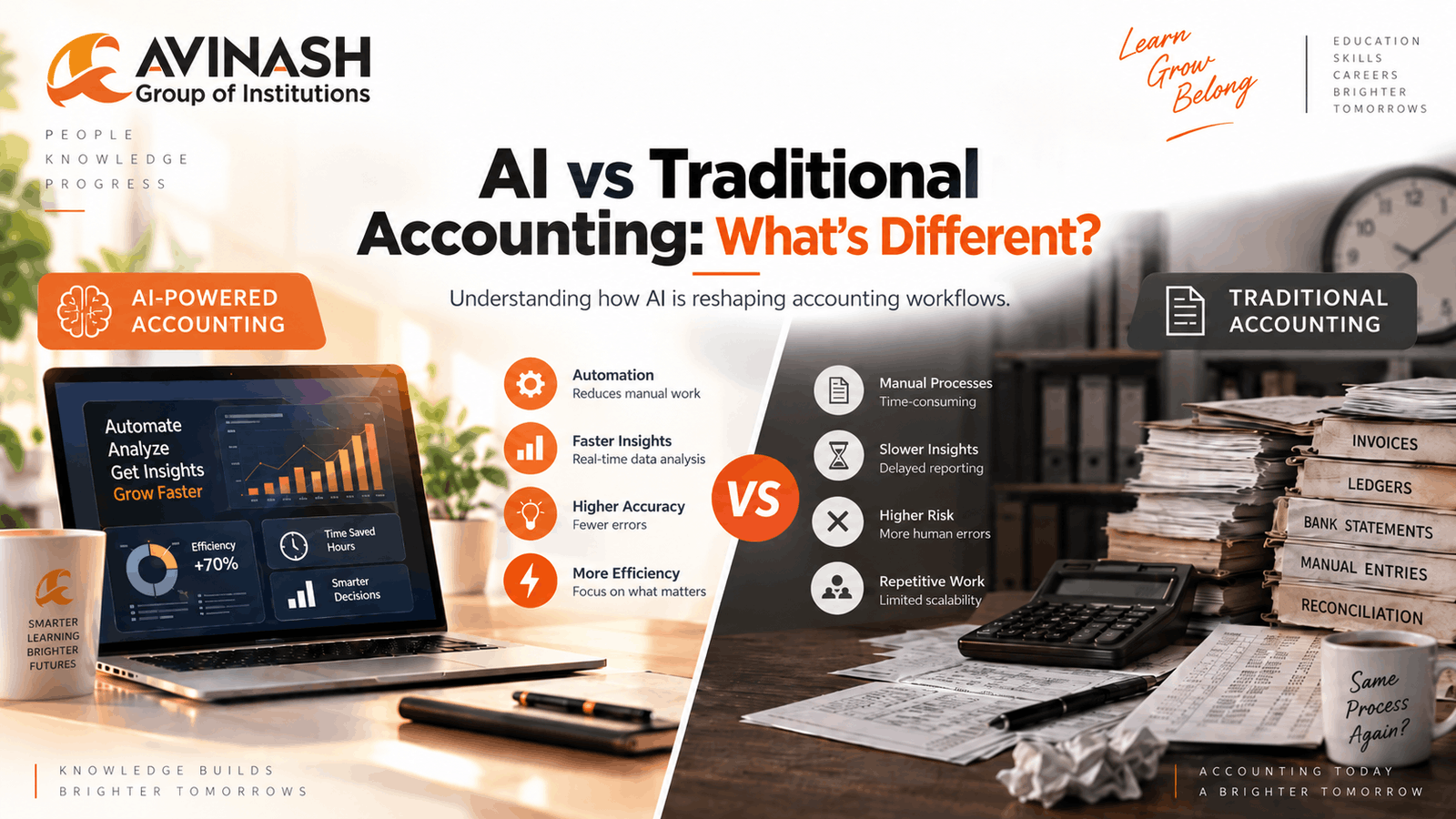
AI vs Traditional Accounting: What’s Different?
Artificial intelligence is changing how businesses record, analyse, process, and interpret financial information. While Traditional Accounting Methods rely heavily on manual processes, established accounting software, reconciliations, and professional review, AI-powered systems can automate repetitive tasks, identify patterns, process large datasets, and provide faster insights. It is also not true to say that traditional accounting is... AI vs Traditional Accounting: What’s Different?
Top AI Certifications for Commerce and Finance Students
Artificial Intelligence (AI) is transforming the way businesses manage data, analyse financial information, automate repetitive tasks, detect risks, and make strategic decisions. As finance and commerce roles become increasingly technology-driven, students with a combination of business knowledge and AI skills can build a stronger foundation for future careers. For commerce students, studying AI does not... Top AI Certifications for Commerce and Finance Students
Benefits of Pursuing CA Alongside a Degree
For commerce students, making a decision about a career after Class 12 becomes crucial. Although earning a bachelor’s degree is a source of academic knowledge, pursuing Chartered Accountant CA Alongside Degree can help students enhance their career prospects. Doing so, students will be able to acquire academic knowledge by earning the degree and develop skills... Benefits of Pursuing CA Alongside a Degree

How ACCA Prepares Commerce Graduates for Global Career Success?
Making the best choice when it comes to professional qualification is one of the crucial decisions made by students that will affect their future careers in finance and accounting. In today’s world where businesses operate in international markets, the demand for professionals having internationally recognised skills and certifications is increasing day by day. The ACCA... How ACCA Prepares Commerce Graduates for Global Career Success?

Why B.Com (Hons) + ACCA Is Best for Global Careers
In today’s competitive and globally connected world, accounting professionals need more than just a traditional degree to stand out. One of the most powerful academic combinations that is gaining attention is B.Com with ACCA. This integrated program blends the theoretical foundations of commerce with the internationally recognised professional credential of the Association of Chartered Certified... Why B.Com (Hons) + ACCA Is Best for Global Careers

What to Do After CA or CMA Exams?
The journey to becoming a Chartered Accountant (CA) or Cost and Management Accountant (CMA) in India is one of the most challenging and rewarding paths in professional education. It demands rigorous preparation, discipline, and emotional strength. Among the most intense phases of this journey is the waiting period after exams—an emotionally charged time filled with... What to Do After CA or CMA Exams?

CA vs CMA (India): Which Course is Right for You?
Certified Management Accountant (CMA) is one of the most respected certifications in the field of management accounting and financial management. Awarded by the Institute of Management Accountants (IMA), the CMA (US) credential signifies expertise in financial planning, risk management, cost management, and strategic decision-making.

Preparation Tips to Clear CA Course in First Attempt
The Chartered Accountancy (CA) course is one of the most challenging professional qualifications. It requires dedication, hard work, and a strategic approach to pass in the first attempt. Many students find it difficult because of the vast syllabus and the need for deep understanding. With the right plan, consistent effort, and smart study techniques, it is possible to complete all levels successfully.

Best Finance and Accounting Career Options After Graduation
Finance and accounting are among the most sought-after fields for graduates looking to build a stable and rewarding career. With the global economy constantly evolving, these fields offer diverse career opportunities across industries. Graduates with a degree in finance or accounting can explore several career paths based on their interests, skills, and long-term goals. This blog explores the best finance and accounting career options after graduation.

CA vs CPA: Understanding the Differences and Which is Right for You
Choosing between a Chartered Accountant (CA) and a Certified Public Accountant (CPA) depends on factors like geographical focus, career aspirations, and educational background. CAs are globally recognized, while CPAs specialize in U.S. accounting standards. Both paths offer robust career opportunities in auditing, financial reporting, and advisory services. This blog breaks down the differences in eligibility, syllabus, and certification process. Avinash College of Commerce provides comprehensive training and mentorship, ensuring students are well-prepared to excel in either profession. With its industry seminars and practical-focused curriculum, the college equips you with the skills needed for a successful accounting career.

Unlocking Your Global Potential the ACCA Course Explained
The Association of Chartered Certified Accountants (ACCA) is a prestigious, globally recognized accounting qualification with over 200,000 members and 600,000 students worldwide. In India, ACCA is comparable to CA, making it a valuable credential for commerce and accounting careers. Avinash College of Commerce offers comprehensive ACCA training, covering syllabus, eligibility, and fee structure, along with exemptions for qualified students. With a strong focus on academic excellence, placement support, and soft skills development, Avinash College prepares students for successful careers in the global accounting field.

A Comprehensive Guide to Becoming a Chartered Accountant
In India, becoming a Chartered Accountant (CA) is a prestigious achievement, requiring rigorous training and exams overseen by the Institute of Chartered Accountants of India (ICAI). The journey begins after 12th grade with the CA Foundation course, followed by Intermediate and Final courses. Along the way, students must complete Article ship training to gain practical experience. Avinash College of Commerce offers comprehensive guidance and expert coaching at every stage, ensuring you are well-prepared to excel in your CA exams and secure a successful career in accounting and finance.

What are the details of CA?
Becoming a Chartered Accountant (CA) in India is a prestigious journey that opens doors to limitless opportunities in finance and corporate sectors. The CA course, spanning over four years, includes the Foundation, Intermediate, and Final levels, along with a mandatory 2-year Article ship training. The curriculum is extensive, covering subjects like Advanced Accounting, Taxation, and Strategic Management. At Avinash College of Commerce, we provide expert coaching, comprehensive resources, and a supportive community to help you excel in your CA journey and achieve your professional goals.